
Finding People in Salisbury Records
Salisbury sits at the Rowan County seat, so a local search often crosses city, county, and state custodians. The assessor connects a street address or owner name to a parcel. The Register of Deeds connects a parcel to recorded land instruments. Election records can confirm registration status within their lawful public fields. For a past household, the library and archives carry dated sources that should never be treated as current proof.
Use the source that fits the question. A tax card identifies the assessed owner and property details, not necessarily a person living there. A directory entry is tied to its publication year. A court case identifies a party to that case, not a complete account of a person. Keeping the record date, role, and jurisdiction beside each result prevents a Salisbury search from becoming a guess.
- Start with the Rowan County property search when an address, owner name, parcel number, book, or page is known.
- Check the parcel on county or city GIS to separate the physical location from its mailing label and municipal boundary.
- Use the Register index to inspect the recorded instrument named by its book and page, then read the actual image.
- For a name and election-status question, use the official North Carolina voter tool with its required identity fields.
- For an older household, preserve the directory year and compare it with a library, archive, deed, or newspaper source.
Note: A second source can corroborate a record role, but it cannot turn a historical entry into a current residence claim.
Salisbury Resident Record Custodians
Three Rowan offices provide the most useful starting points for a Salisbury residents directory search. The Register keeps land instruments and local vital-record routes. The Tax Assessor maintains the indexed parcel card. The Board of Elections assists with voter records and registration matters. The court clerk, library, and city offices add separate layers. For a full address chain, use the Salisbury street directory route rather than treating any one office as a master resident list.
Rowan County Register of Deeds
402 N Main St
Salisbury, NC 28144
704-216-8626
Rowan County Tax Assessor
402 N Main St, Suite 201
Salisbury, NC 28144
704-216-8558
Rowan Board of Elections
1935 Jake Alexander Boulevard W
Salisbury, NC 28147
704-216-8140
When a portal does not supply the record needed, the county’s public-record request form routes a request to the correct department. Court, Register, and some public-safety records have their own custodian routes, so name the record type, date range, address, parcel, or case number in the request.
Salisbury Parcel Clues and Owners
The Rowan real-property search accepts Parcel ID, address number, street, ZIP, owner name, account number, book, and page. Rowan’s guidance is unusually practical: use one field at a time, enter an owner last name first, and leave road, street, or drive out of a street-name query. A returned card can show the parcel identifier, situs address, mailing address, legal description, tax district, land use, building summary, and recorded transaction references.
Those labels matter. A situs address is the property location. A mailing address is where a tax notice goes. An owner is the person or entity shown for tax purposes. None of those labels alone establishes current occupancy. Save the source date because the research inspection found the portal could display maintenance messaging.
See the fields on the Rowan assessor search before choosing an address or owner path.
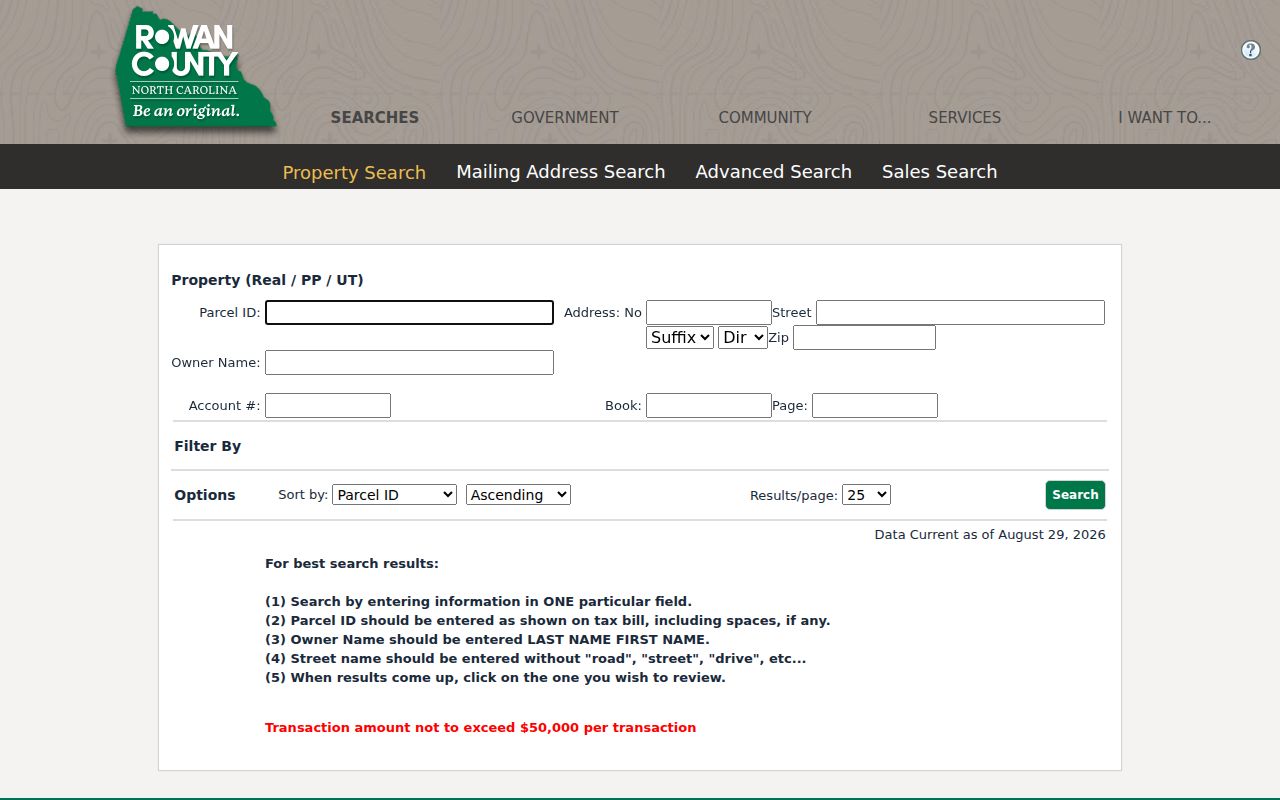
The controls make a one-field search and careful result review more useful than a broad name-only search.
| Field | How Rowan presents it | Use with care |
|---|---|---|
| Parcel ID | Tax-bill formatted identifier | Keep spaces as shown |
| Owner Name | Last name, then first name | Owner does not equal occupant |
| Street | Street name without generic suffix | Confirm the selected result |
| Book and Page | Recorded reference route | Use the deed image for the controlling text |
Salisbury Voter Roll Boundaries
The state voter lookup is a narrow, interactive tool, not a free-form people directory. Its verified controls require first and last name and provide middle initial, birth year, county, and voter-status choices. Results can include registration status, jurisdictions, polling place, sample-ballot information, and voting history. The state says current registration files update weekly, while voter history is maintained as a separate file.
North Carolina law makes some voter fields public while protecting full dates of birth, Social Security numbers, driver-license data, email, photo-ID copies, and protected addresses. Age is not a substitute for a full birth date. Address confidentiality protections can apply to eligible people, and a removed or inactive status is not a statement that someone has moved from Salisbury.
The official North Carolina voter-lookup entry page describes the available result categories.
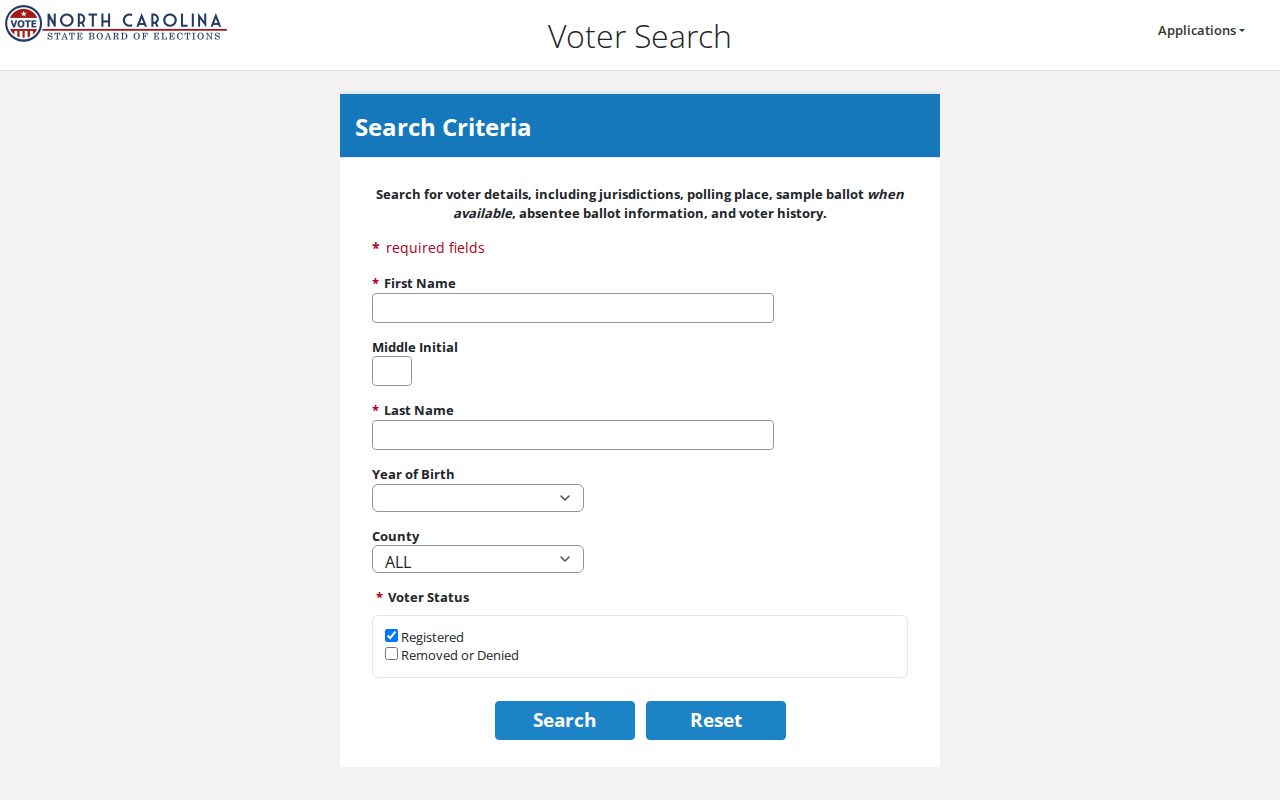
Use the county and status controls to narrow a search, then preserve the status and access date with any lawful research note.
Current Salisbury Residents Directory Sources
Current sources are separate record layers, each with a different scope. The tax roll is about assessed property. The voter tool is about election registration. A deed index identifies parties to a document. City GIS and permits describe location and public activity. Voluntary neighborhood groups may help residents connect, but their private membership lists are not public records and should not be reproduced.
| Record layer | What it can identify | Custodian | Access route |
|---|---|---|---|
| Parcel card | Property and assessed-owner context | Rowan Tax Assessor | Online search, counter, or phone |
| Voter search | Registration and public election fields | NC State Board of Elections | Interactive lookup or list request |
| Land index | Grantors, grantees, book, page, instrument | Rowan Register of Deeds | Online index and office records |
| Permit and code activity | Address-linked public activity | City or county departments | CSS, department, or request |
| Community groups | Voluntary civic contact routes | Associations | Association-controlled access |
When the goal is to verify one name across these limited roles, a Salisbury resident lookup should keep source, date, and identity checks in the right order.
Salisbury Postal and City-Limit Checks
Salisbury’s city name, postal label, and municipal boundary do not always describe the same thing. The city GIS service exposes city limits, the Rowan County boundary, and non-annexation boundaries. County assessor and deed records remain the parcel and instrument sources even when a mailing address says Salisbury. Check geography before describing a parcel as inside the city.
The city map catalog is useful for address points, neighborhoods, historic districts, and street context. Its warning is important: maps are approximate, and a deed or plat should verify a legal boundary. A ZIP or mailing city can help route mail but cannot prove municipal location or residency.
- Parcel
- A defined tract used in tax and mapping systems.
- Roll
- A list maintained for one administrative purpose, such as tax or voter registration.
- Index
- A finding tool that points to a record rather than replacing its full document.
- Criss-cross directory
- A historical directory arranged by address instead of name.
Note: Retain the source’s address label and date when county, city, postal, and historical descriptions differ.
Rowan Deeds Behind Salisbury Names
The Register of Deeds is where a parcel trail becomes a document trail. Its indexed land records expose date filed, instrument kind, grantor, grantee, description, book and page, amount, reference, and image controls. A sample result warns that the description is “Not Warranted,” which is a direct reason to read the recorded image and any linked plat rather than relying on the index text alone.
Certified-date information inspected for this project lists land coverage beginning in 1753 for the pre-1975 segment, with separate current segments for 1975 to 1994 and consolidated real property from 1995. Coverage labels are search guidance, not a promise that every image resolves a household question. Historical image coverage noted by the portal includes 1753 to 1875 record books 1 through 50.
The Rowan parcel-index example shows the book, page, party, and image-control pattern.
Rowan’s Property Check adds a preventive notice option to this trail. After account setup, a user can designate a property, owner name, or parcel ID for email or text alerts. The Register is explicit about the limit: an alert does not stop a fraudulent document from being recorded, and the office does not decide whether a document is valid. Treat the alert as a prompt to review a filing and contact the Register or law enforcement when appropriate, not as deed validation.
That limitation also explains why a residents directory must separate an index hit from a verified instrument. The assessor card can offer a parcel key, the Register index can offer parties and a book/page, and a recorded image can show the document text. Each is useful, but each describes a narrower fact than a complete history of the people associated with an address.
Note: A grantor or grantee is a party to one instrument and should be labeled by that role.
Salisbury Public-Request Fallbacks
North Carolina’s Public Records Act allows inspection or copies of existing public records subject to exceptions and redactions. It does not require an agency to create a new list, answer an abstract question, or compile records that do not exist. For a missing online item, a focused request should identify the office, record category, date range, address or parcel, case number, and preferred format.
Rowan’s form asks the requester to select a department and provide request details and contact information. Its instructions direct court, Register, certain public-safety, and body-camera matters to special routes. That division is helpful: a precise request for an existing file gives a custodian a record to locate, while a broad request for “everyone at an address” may not describe a record the office keeps.
The Rowan public-record request form displays the department selector and request-detail fields.
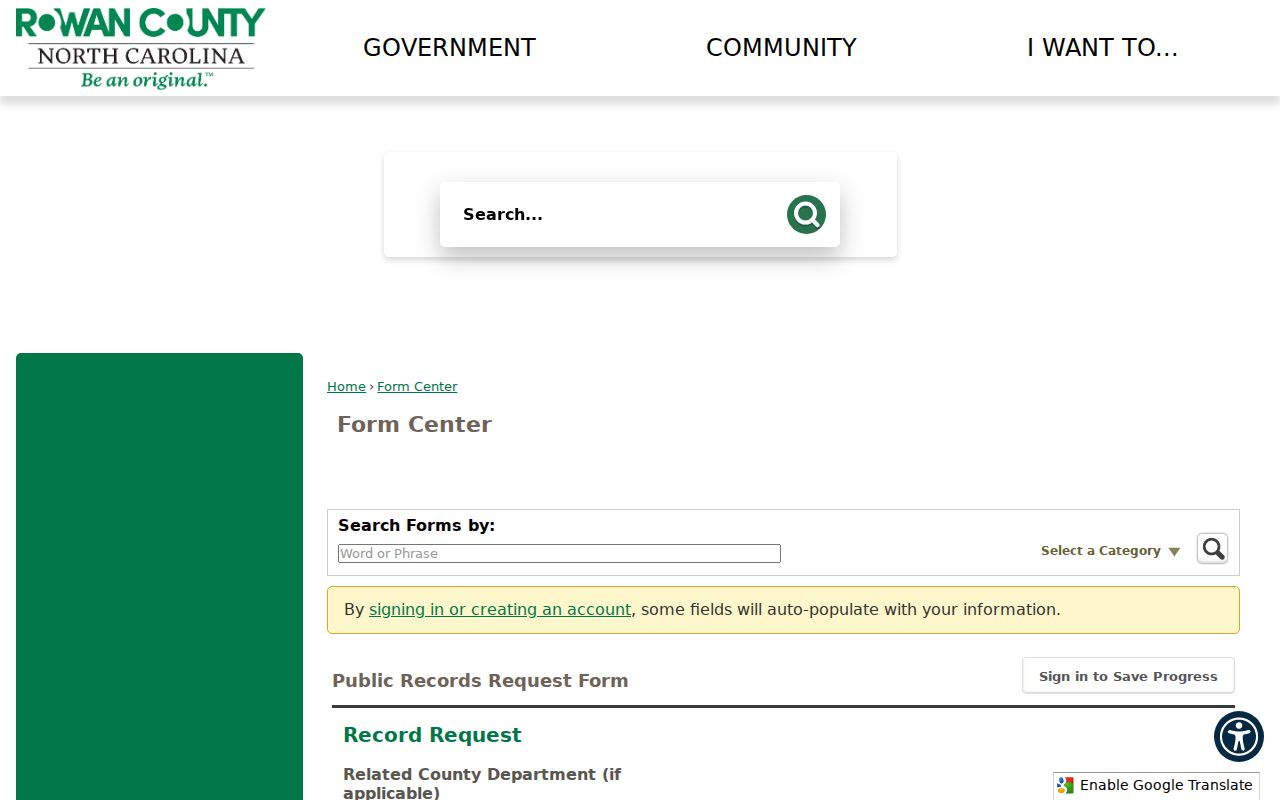
A department-specific request is the useful fallback when a searchable index does not hold the needed existing record.
Salisbury Historical Resident Directories
For a past household, Salisbury city directories, the Edith M. Clark History Room, DigitalNC, Sanborn maps, newspapers, and State Archives records form a better historical shelf than a current roll. Reported directory holdings include 1901, 1907–08, 1910, 1919–20, 1922–23, 1924–25, 1928–29, 1940, and later runs. Sources differ on the 1919–20 publisher attribution, so inspect a title page before treating a catalog line as final.
A directory can connect a name, occupation, address, and sometimes an ownership notation, but it can omit people or carry a prior entry. Sanborn sheets show building footprint and use, not who occupied a room. The full collection trail, including the dated volumes and how an entry reads, belongs in the Salisbury directory book. Historic sources work best as a sequence: hold the printed year steady, compare one independent record, and keep uncertain address changes clearly labeled.
Note: Preserve the printed year and original place label before comparing an old entry with a current address.
Salisbury History Room Discovery
Rowan Public Library’s Edith M. Clark History Room gives the local research trail a human scale. The collection reports more than 19,000 books, 5,700 microforms, 268 manuscript collections, journals, oral histories, maps, and surname vertical files. Its online surname index and the McCubbins Collection can create leads that no current property or voter system was designed to supply.
The History Room is at the library headquarters, 201 W Fisher Street in Salisbury. The main library phone is 704-216-8228 and History Room/Genealogy Reference is 704-216-8253. Research requests are limited, so bring a name, year, street, collection title, or known record reference rather than asking staff to reconstruct an entire family or address history.
The History Room holdings page identifies its local research materials and contact path.
Note: A surname file is a research lead that still needs a dated document or catalog source for confirmation.
Salisbury Court Access After eCourts
North Carolina completed its statewide eCourts conversion on October 13, 2025, including Rowan. The live portal returned a 403 response during the research inspection, so its current screen labels and result columns should not be guessed. Verified alternatives are the Rowan courthouse and clerk route, public self-service terminals, the official court location page, and a targeted copy request.
Where an accessible court record is relevant, retain the case number, party role, filing date, case type, status or disposition, and redaction notice. Juvenile, involuntary-hospitalization, sealed, and expunged records have confidentiality limits. A name hit can be a different person or a limited role in a case, so it requires independent identity checking.
Consult the North Carolina court-records guide for online, terminal, clerk, and copy-access paths.
The portal landing view is not a substitute for the courthouse and clerk fallback when access or record confidentiality limits the result.
Salisbury Record Safety Limits
Official records do not establish a complete personal profile. The safest practice is to keep public roles separate: owner, grantor, grantee, voter, case party, directory entry, or registered-offender record. Do not merge same-name records without several corroborating fields. Do not publish protected addresses, Social Security numbers, full dates of birth, driver-license data, signatures, medical information, adoption material, or unnecessary family details.
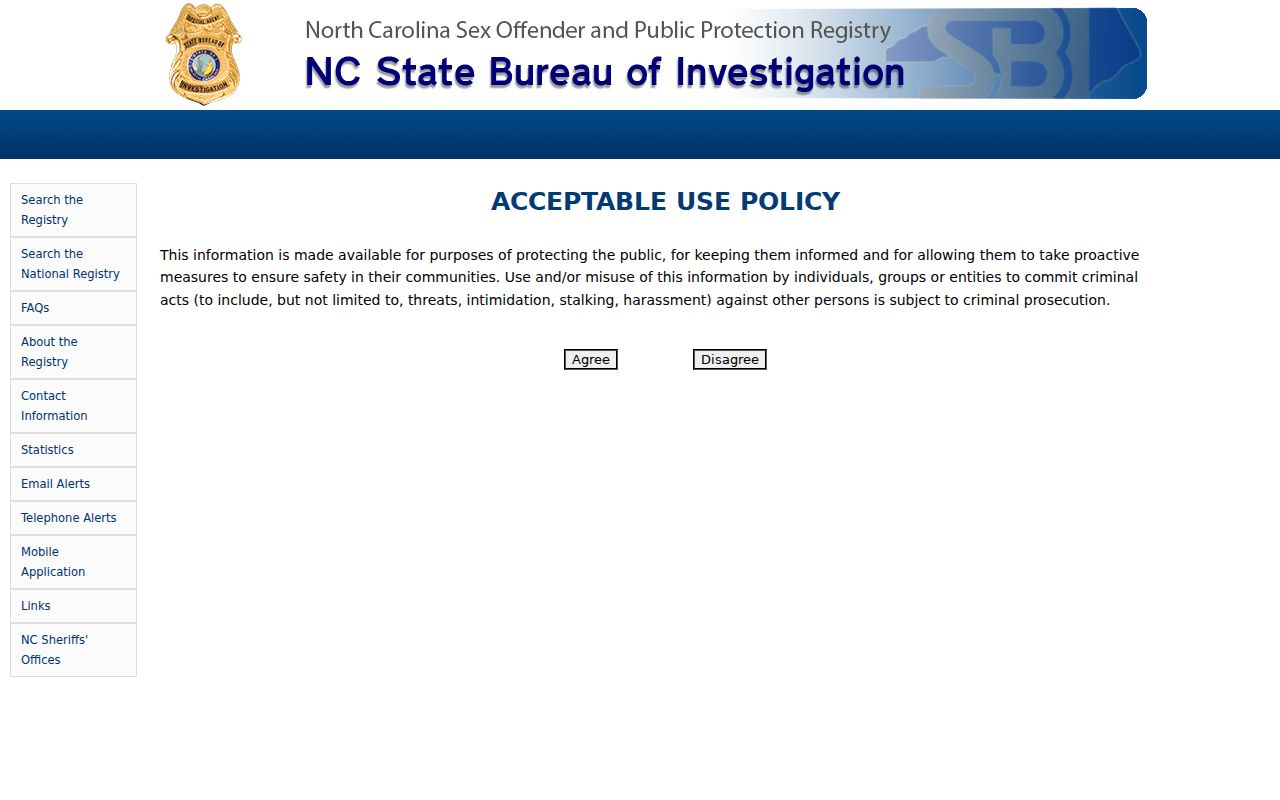
The state registry is a specific public-safety system, not a general identity tool. Its warning says an apparent name match must be confirmed by fingerprints and misuse may lead to prosecution. The official NC SBI registry displays its safety and search notices.
Keep a registry result separate from court, custody, voter, and property records, and retain the agency and search date.